> For the complete documentation index, see [llms.txt](https://docs.zipy.ai/llms.txt). Markdown versions of documentation pages are available by appending `.md` to page URLs; this page is available as [Markdown](https://docs.zipy.ai/integration/coralogix.md).
# Coralogix
Get Zipy session url against error in Coralogix
### 1. Include Zipy session url in the metadata.
Put below code in the \ tag of your site.
```javascript
```
After adding this code in your site you should be able to send Zipy session in Coralogix.
### 2. Find Zipy session url in Coralogix
Go to **Logs** screen and select **SEVERITY** from the panel. Then click on **Columns** from the toolbar at top.
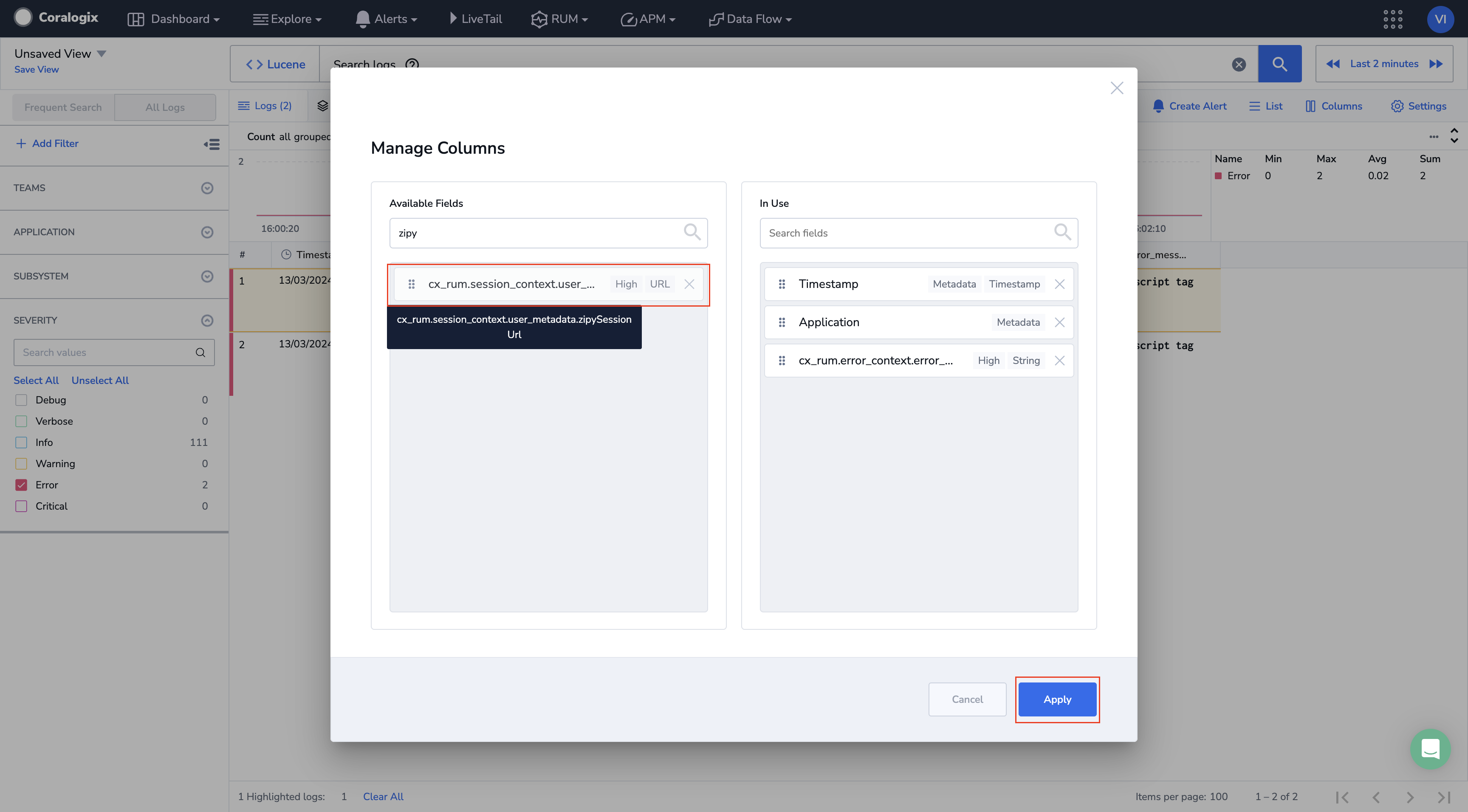
A pop up will be opened, find the Zipy session url metadata field there by typing 'zipy' in input area. Then drag the *zipy session url* metadata field from **Available Fields** to **In Use**. Then click on **Apply** button.
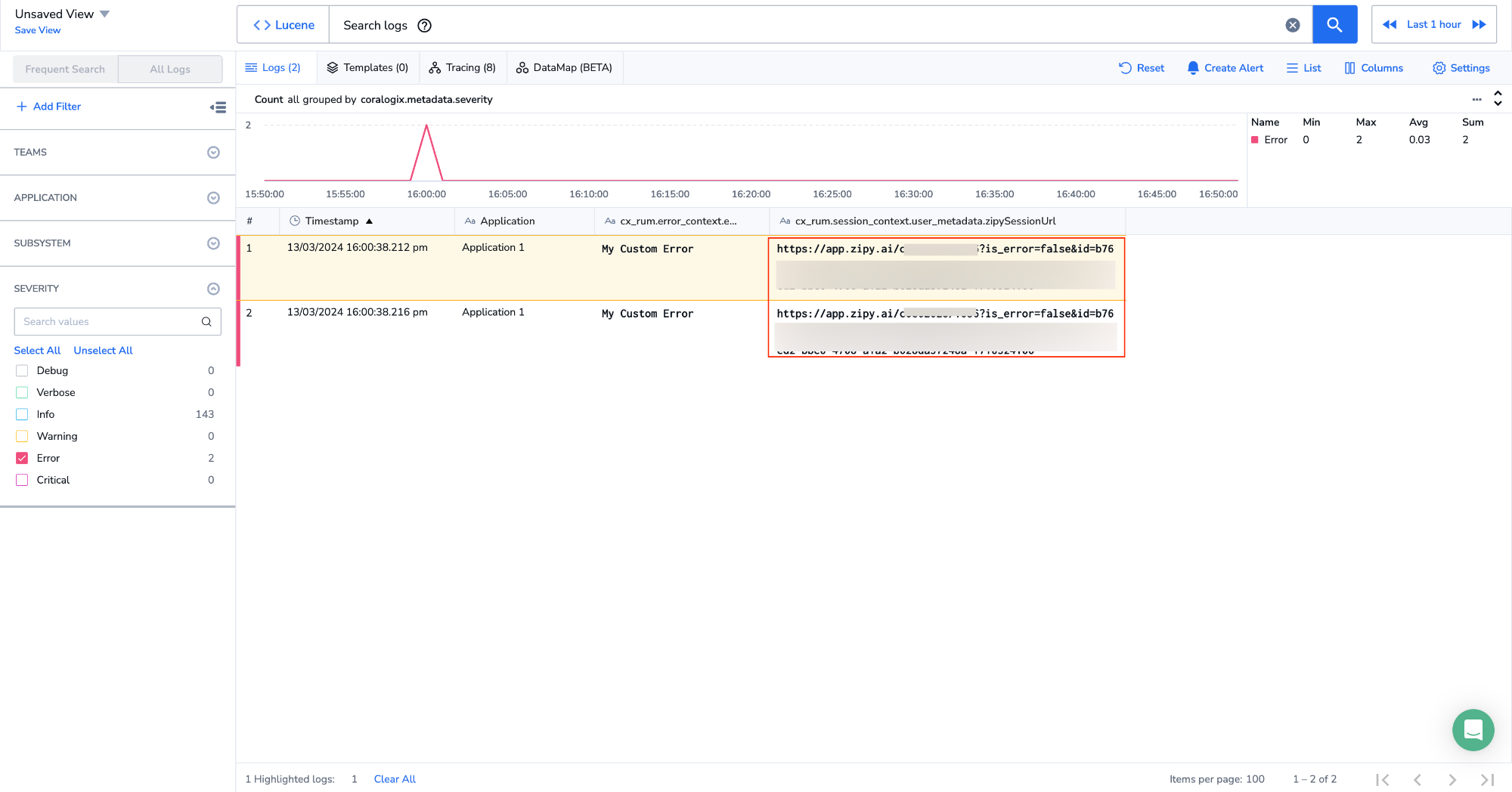
Now you should be able to see to Zipy session url in your Coralogix **Logs** screen.
.png?alt=media&token=1b3c13b7-e9b6-45e9-b49f-8097ef184569)